Showing posts with label Koenigsegg. Show all posts

Monday, March 8, 2010

Geneva 2010: NLV Quant Concept


The second generation NVL Quant made its public debut in front of media yesterday in Geneva, bringing with it what NVL Solar, its creator, calls "a breakthrough the market eagerly has been anticipating for years." While this last statement is a matter of interpretation, the Quant does bring a range of interesting features. The most exciting thing about it, however, is the promise to turn production version rather sooner than later.


Set to be production ready next year, the Quant was designed to prove "cutting-edge supercars can combine speed, comfort and enjoyment with environmental integrity." It features two different battery systems ("a long-life metal-air battery or a rechargeable redox flow cell"), four torque-vectoring electric motors, a full carbon fiber chassis, and a revolutionary thin-film coated photovoltaic body.


The Quant has some initial performance figures which would give a regular, internal combustion engined supercar, a good run for its money: 2.8 seconds 0-100 km/h acceleration time and a top speed of 377 km/h (234 mph).


The latter converts light into electricity to supply the operating electronics and the battery. While it's a bit technical, NLV says the coating has "an average photovoltaic conversion efficiency of 38%, depending on ambient conditions, and a peak performance of over 50%." More importantly, the company believes they can tune the material's absorption characteristics to create multiple layers with their own unique absorption frequency. As impressive as this is, NLV estimates the film will have a degradation coefficient of only 5-6% over 20 years.


The Quant comes with four airbags, ABS and ESP, two infotainment panels for the rear seats, zone Climate Control system, LED front and rear lights and, la piece de resistance, NLV photovoltaic thin film solar coating all over the body of the car.


More Photos


Press Release


NLV Solar AG, a pioneer in photovoltaics and accumulator technology, have joined forces to create the Quant sport. The brainchild of this marriage of power and energy is a four-seater electric car - a breakthrough the market eagerly has been anticipating for years. A prototype is to be unveiled at the Motor Show Geneva 2010, with currently working to scale up for series production.

The NLV Quant is an exciting, revolutionary automotive project. Within the coming year, the NLV Quant will be fully engineered and ready for production. You can follow the last few stages. The design, drive system, range and photovoltaics of the Quant are already spectacular and record-breaking as individual components, and we believe that together they will mark a milestone in automotive history.

Technics

The NLV Quant is proof that cutting-edge supercars can combine speed, comfort and enjoyment with environmental integrity. It implents the mobile energy technology of the future. The NLV Quant has two different battery systems, a torque vectoring with 4 electric motors and a full carbon chassis. A thin-film coated photvoltaic car body supplies the operating electronics and also supports the battery. Gull-wing doors provide easy access to all four passengers.

Carbon Chassis

A reason for the car's low weight is the utilisation of a carbon-fibre monotube backbone chassis, construction, which houses the FAES system safely inside the centreline of the car at the lowest possible position, bringing down the centre of gravity and central mass point.

Using tradition lay-up, the vacuum bag generates the pressure for consolidating the carbon plies. In RTM process there are two moulds and the pressure comes only from the resin pump. The design becomes quite critical as inner and outer skin has to be perfectly defines in order to have a designed volume matching exactly the tooling volume. The risk is to have voids generated by not precise fitting of the inner cores.

Thin Film

The NLV Quant is coated with a thin film made of pyrite, which converts light into electricity to supply the operating electronics and also support the battery. This innovative pyrite technology is cost-effective, efficient and ecological.

NLV Solar AG has developed an iron-sulphur composite semiconductor using digital prototyping, with very promising results. The research indicates:

  • an average photovoltaic conversion efficiency of 38%, depending on ambient conditions, and a peak performance of over 50%
  • the possibility of fine-tuning the material's absorption characteristics by modification of its crystal lattice structure using ion implantation; stacked in a multilayer thin-film cell, it would be possible to tune each layer to a different target absorption frequency
  • as a thin-film cell, the material could be applied to substrates in a transparent, semi-transparent or tinted coating
  • the projected degradation coefficient is only 5-6% over 20 years

Electric Power

The NLV Quant allows for the modular installation of either a long-life metal-air battery or a rechargeable redox flow cell. These are both future-oriented, secure energy sources which help give the Quant exceptional power and range.

Speed

The projected curb weight of 1680 kg is very light considering that it is a battery-powered, four-seater, luxury performance car. This is partly due to the four-motor installation- a remarkable achievement which allows the NLV Quant to deliver 0-100 km/h in 2.8 seconds and hit a top speed of 377 km/h.

Gullwing

The gull-wing doors set the NLV Quant apart from any other four-seaters on the market. As well as being a stylish feature, they also make entry to the car more ergonomic, thanks to the lack of B-pillars. They provide easy access to both the front and rear passenger seats. The unique split side-lite feature allows either passenger to open and close the front and rear side windows separately, despite the fact that there is only one door per side.

Preliminary Specs

  • Power: 600 kW ( 4x 150 kW), 800 bhp
  • Rotation speed 12'000 U/min
  • Torque: 1500 nm
  • 0-100 km/h: 2,8 seconds
  • Top speed: 377 km/h
  • Curb weight: 1680 kg
  • Wheelbase 3102 mm
  • Track - Front: 1730 mm; rear: 1729 mm
  • Wheels/tyres ? front: 245/35 - 23"; rear: 285/30 - 23" - low friction tyres
  • Width: 2016 mm incl. rear-view mirrors; length: 4879 mm; height: 1335 mm
  • Rear-wheel drive
  • Four-wheel brake regeneration
  • Minimum 4 airbags, ABS and ESP and torque vectoring
  • 2 infotainment panels Adjustable rear seats
  • 3 zone Climate Control system
  • Generous leg room in the rear
  • LED front and rear lights
  • Body covered in NLV photovoltaic thin film solar coating
  • Accumulator with cooling liquid (weight ca. 500kg)
  • Operating voltage 420 V
  • Inverter voltage 350 V
  • Price: TBD

Features

  • NLV Quant has two different battery systems: on the one hand, purely conventional accumulator technology with a transition metal and air mixture, and on the other hand, a pure redox flow cell
  • Thin-film photovoltaic coating of car body and windows
  • Torque vectoring with 4 electric motors for wheel-specific torque distribution to enhance the vehicle's agility and stability
  • Full Carbon chassis and carbon body
  • Minimised running and manufacturing costs thanks to new technology
  • Optimised safety
  • Unique/functional design, vehicle comfort and loading capacity

Thursday, March 4, 2010

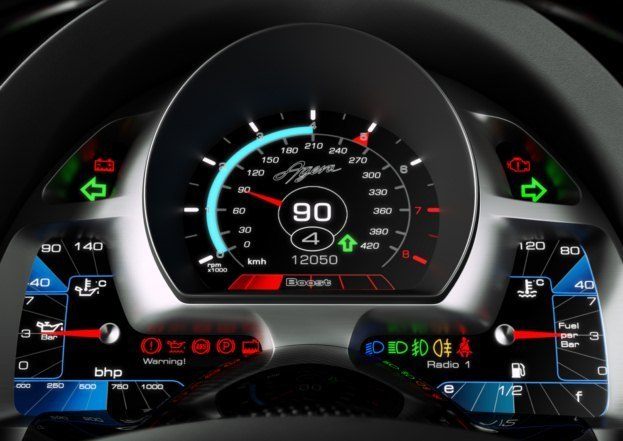
Koenigsegg Agera

Koenigsegg Agera
Koenigsegg Agera
Koenigsegg Agera
Koenigsegg Agera Photos
Koenigsegg Agera Wallpapers
Koenigsegg Agera Images
Koenigsegg Agera Pictures

Wednesday, February 24, 2010

Geneva Motor Show: NLV Quant returns with less Koenigsegg


A year ago in Geneva, NLV Solar and Swedish supercar builder Christian von Koenigsegg turned up with a four-seat electric car that incorporated photovoltaic energy collectors in the body surface. At that time, it was nothing more than a styling buck. Next week, again in Geneva, NLV will be back to provide an update on the Quant (this time without Koenigsegg). The company is now planning to have a running prototype of the Quant on the road later this year with a production-certified machine by 2012.
more detail. ...

Monday, December 14, 2009

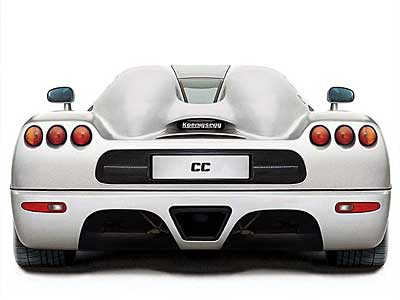
Koenigsegg cc wallpapers


Koenigsegg cc
Koenigsegg cc
Koenigsegg cc wallpapers
Koenigsegg cc
Koenigsegg cc
Koenigsegg cc pictures
Koenigsegg cc
Koenigsegg cc

Monday, September 14, 2009

Koenigsegg CCX - Pictures and Videos

Showcasing the super cool car, the Koenigsegg CCX. The Koenigsegg CCX is a mid-engined roadster from Swedish car manufacturer Koenigsegg priced at $545,568. It was awarded one of the 10 Most Beautiful Cars by Forbes Magazine. The CCX can accelerate from 0–62 mph (100 km/h) in 3.2 seconds and from 0–124 mph (200 km/h) in 9.8 seconds.


Koenigsegg CCX Video


CCX is an abbreviation for Competition Coupe X; the X commemorating the 10th anniversary, (being the Roman numeral for ten), of the completion and test drive of the first CC vehicle in 1996.

Specifications

Vehicle Type: - production car, two-door Coupe
Configuration: - Mid Engine
Engine: - Supercharged V8
Capacity: - 4700 cc
Torque: - 678 lb-ft at 5700 rpm
Horsepower: - 806 bhp at 6900 rpm
Transmission: - 6-Speed Manual
Length: - 169.0 inches
Width: - 78.6 inches
Height: - 44.1 inches
Weight: - 2601lbs
0-60 mph: - 3.2 sec
Top speed: - 245 mph
Price: - $545,568


The CCX was first unveiled on February 28, 2006 at the 2006 Geneva Motor Show although its existence was announced earlier. A derivative known as the CCXR is available, the main difference being that CCXR's engine is tuned to run on biofuel. The different fuel and tune allows the CCXR to produce 25% more power than the CCX.

More Koenigsegg CCX Videos


Tuesday, September 2, 2008

2011 Koenigsegg sedan

Rumors about a four-door model from Koenigsegg started to circulate last week. Today we bring you first TopSpeed rendering of the future sporty sedan that will make its official debut in 2010 as a concept model at the Geneva Motor Show and as a production model in 2011. The currently unnamed sedan will compete with models like Aston Martin Rapide and Porsche Panamera.

2011 Koenigsegg sedanThe four-door model is supposed to have been under development for the past two years and will be made entirely out of carbon fiber. Power should come from a V8 engine that will develop around 700 hp. This engine will help the car to hit a top speed of around 215 mph. The sedan will be limited to only 70-80 units and will be cheaper than the CCX.

© Source: topspeed
We need your comments below >>

Thursday, February 28, 2008

Geneva '08 Preview Koenigsegg CCX and CCXR Edition

The Swedes seem to have a way of cutting through the hype. While its rivals call the special versions of their supercars things like "Hermes edition" and "Versace edition", Koenigsegg simply calls theirs the Edition. Too cold up there to tolerate fancy fashion labels tarting up their supercar.

Koenigsegg CCX and CCXR EditionKoenigsegg CCX and CCXR Edition-2It's been three months since we brought you the news of the Koenigsegg CCX and CCXR Edition, and the extra-special exotics will finally have their day in the spotlight as the Scandinavians make their way southwards to Geneva. As a quick refresher, the Edition models feature a twin-supercharged 4.8-liter V8, producing 888 hp in the CCX Edition and 1,018 hp in the ethanol-burning CCXR. Like Henry Ford said, you can have it in any color, as long as it's black: the Edition models come in bare carbon fiber, heavily lacquered to make it shine, with red accents for the ethanol version.

Extra equipment, from the carbon-fiber wheels to the rearview camera, come as standard, while special interior touches round out the package, including color-matched leather carpets and special instruments and controls. Only 14 CCX Editions will be made, and just 6 of the CCXR Edition, the first two of each already spoken for at over $2 million apiece with the first delivery taking place right under our noses at the Geneva show.

© Source: autoblog
We need your comments below >>

Wednesday, May 23, 2007

Koenigsegg

Koenigsegg has only produced 45 cars in its entire history, but it's already getting tricky to keep tabs on the different models coming out of the Swedish supercar manufacturer's doors.

We've had the CC8S, the CCR, the CCGT and the CCX - no, not a clue - and now there's this: the CCXR. But you won't be forgetting about this one in a hurry.

KoenigseggKoenigsegg 2Koenigsegg 3Koenigsegg 4Because the CCXR is the first Koeniggsegg - hell, the first supercar runs on E85 bioethanol, a mix of 15 per cent petrol and 85 per cent of what is, essentially, pure alcohol.

The theory behind bioethanol is straightforward enough: whatever crop you choose to distil your moonshine from will have absorbed at least as much CO² while it grows as it releases when it's burnt.

Factor in the energy to convert the crop to bioethanol, accept that bioethanol cars have about a 25 per cent greater thirst, and the upshot is that a car running on E85 will have a 50 per cent smaller carbon footprint than an equivalent car running on petrol alone.

And, in good news for a car that'll set you back a snip over 600 grand, bioethanol gives out even more power. The Koenigsegg CCXR develops 1,004bhp. The Veyron puts out 986bhp. So, halved carbon footprint and all, the CCXR is the world's most powerful production car.

On the road, that means a 0-62mph time of 3.2 seconds and a top speed on the scary side of 250mph. Clearly the CCXR is a car that requires a superhuman test pilot. A other-worldly blend of racing driver and bioethanol-glugging loon. In other words, the Stig.

Yes, we sent our barely tamed test driver to Sweden to wrestle with the CCXR. To find out what happened, you'll need to buy this month's issue of Top Gear magazine.

In the meantime, though, read what a crash in the world's greenest supercar feels like.

And, just before you laugh off the CCXR as a cynical cash-in on the big green problem, consider this.

Because Koenigsegg is free from the rigours of production cycles and corporate accountability and influence of the oil lobby, its tiny bunch of alternative fuel pioneers are more able to experiment and progress with green technologies than most other car manufacturers.

No, the CCXR isn't going to create any fresh ice caps or rehouse stranded polar bears, but at least it proves how far eco-technology can be pushed.

© Source: topgear
We need your comments below >>